AI applications in Augmented Reality (AR) and Virtual Reality (VR)
 Vedang Jain
1. Object Detection & Recognition

AI enables AR apps to recognize real-world objects (e.g., furniture, faces, or landmarks) and overlay digital content accurately.
Example:
AR shopping apps recognize your room and place 3D furniture using AI-powered object detection. (Apps like Amazon and Flipkart)
2. Personalized User Experience
Augmented Reality (AR) and Virtual Reality (VR) are revolutionizing user experience (UX) by offering highly personalized and immersive interactions that adapt to individual preferences, behaviors, and even physical locations.
Example:
In VR learning, AI can adjust the difficulty level based on the learner’s progress and engagement.
3. Realistic Avatars and NPCs
Realistic avatars and non-player characters (NPCs) are increasingly integrated into augmented reality (AR) experiences to enhance immersion and interaction within real-world environments, with applications spanning gaming, social media, education, and remote collaboration.
Example:
It’s even been used in several high-profile titles, including No Man’s Sky, Persona, Hades, and Diablo. An example of a generative AI game with AI NPCs is Cygnus Enterprises whose companion character PEA is powered by generative AI.

4. Gesture Recognition
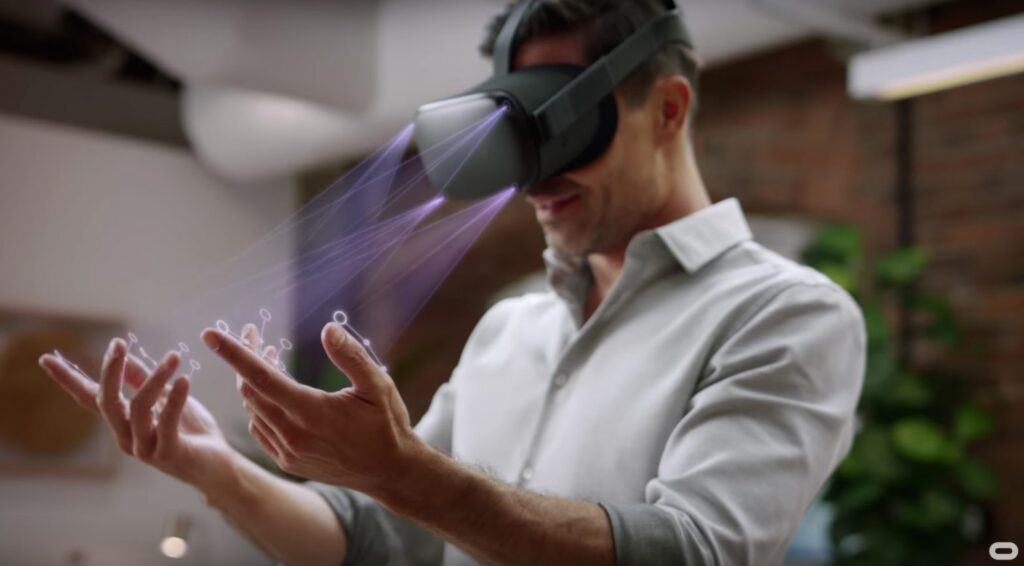
Gesture recognition is a crucial aspect of creating immersive and interactive Virtual Reality (VR) and Augmented Reality (AR) experiences. It enables users to interact with virtual objects and environments in a natural and intuitive way, using hand or body gestures.
Example:
Applications like VRChat use AI to track hand movements, allowing users to interact with virtual objects in a more natural way.
5. Environment Understanding
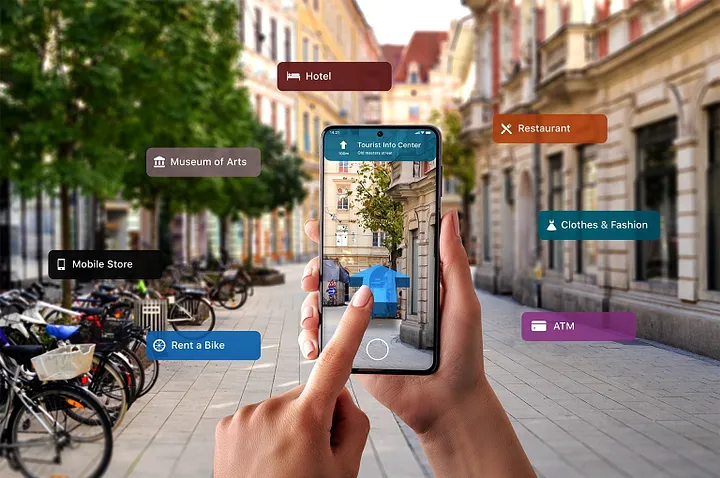
AI helps AR apps understand the user’s surroundings in real-time—important for placing digital objects or creating mixed-reality experiences. This comes under Object Detection And Recognition.
Example:
AI in AR navigation apps identifies walls, doors, and paths to guide users indoors.
6. Training & Simulation

Virtual Reality (VR) and Augmented Reality (AR) are transforming training and simulation by offering immersive, interactive, and safe environments for skill development and practice. AI enhances training simulations in VR by creating responsive scenarios, tracking performance, and offering feedback.
Example:
AI-powered VR for medical or military training simulates complex, dynamic situations.
7. Content Creation
Example:
Game developers use AI to auto-generate VR landscapes or populate worlds.
8. Emotion and Eye Tracking
Eye-tracking technology in VR and AR provides detailed insights into user attention, cognitive processes, and emotional responses within immersive environments, enabling enhanced user experiences, optimized content, and more realistic interactions. It works by monitoring eye movements, pupil dilation, and gaze direction, which can then be used to adjust content, improve rendering efficiency through foveated rendering, and create more lifelike avatars in virtual spaces.
Example:
In VR therapy, AI tracks emotional cues to adjust the session in real time.